
The academic integrity landscape continues to evolve at a rapid pace, and Turnitin has been at the forefront of this transformation. As we move through 2026, the platform has rolled out significant updates to its AI writing detection capabilities, responding to the ever-escalating “cat-and-mouse game” between AI humanizers and detection technology.
If you’re an educator, student, or academic professional trying to stay ahead of the curve, here’s what you need to know about the latest Turnitin AI detector changes as of July 2026.
Understanding Turnitin’s AI Detection Architecture
Before diving into the specific updates, it’s important to understand what Turnitin is working with. According to their official documentation, Turnitin’s AI writing detection tool is built around a unique transformer deep-learning architecture that enables institutions to identify when AI tools may have been used in submissions. This foundation has allowed for increasingly sophisticated detection capabilities over time.
Top 10 Important Updates from Turnitin (July 2026)
1. Enhanced AI Bypasser Detection (May 2026)
This is perhaps the most significant update of 2026 so far. As of May 8, 2026, Turnitin enhanced its AI writing detection capabilities to detect the likely use of leading AI bypasser tools. These tools attempt to modify AI-generated text to appear more human-like, with the goal of avoiding detection by AI writing detectors.
This update represents a significant escalation in the detection arms race. Tools that previously worked to mask AI-generated content are now being caught more effectively than ever before.
2. Japanese Language AI Detection Added
Turnitin has expanded its language support significantly. The AI writing detection model can now process submissions written in Japanese for text that was likely AI-generated. Once submitted, a Japanese AI writing report is generated for instructors to review.
Important caveat: Spanish and Japanese AI reports do not include the same paraphrasing and bypasser detection capabilities as the English version, which is something to keep in mind for international institutions.
3. Multi-LLM Coverage Expanded
Turnitin’s detection capabilities now cover all major language models including:
- Claude (Anthropic)
- Gemini (Google)
- DeepSeek
- ChatGPT / GPT-4
It’s worth noting that Turnitin’s detection targets writing patterns rather than brand names—so regardless of which AI tool was used, the underlying patterns often remain detectable.
4. AI Humanizer Detection Improvements
The 2026 model specifically targets content modified by AI “humanizer” tools designed to evade detection. Testing suggests that basic paraphrasing tools are less effective than they used to be at avoiding detection.
However, more advanced humanizing workflows that substantially restructure and rewrite passages can still reduce detection scores. Turnitin acknowledges this limitation openly.
5. Longitudinal Baselining Features (2026 Roadmap)
Looking ahead to the full 2026 roadmap, Turnitin has announced plans for longitudinal baselining. This optional feature will allow institutions to track changes in student writing patterns over time, helping to distinguish between genuine skill development and sudden shifts that might indicate AI assistance.
6. Multi-Modal Detection Coming
Turnitin’s 2026 roadmap indicates that detection will broaden beyond plain text to include:
- Speech-to-text detection
- Image-to-text detection
- Code generation detection
- AI-assisted research identification
This represents a major expansion of what “AI detection” means in the academic context.
7. Integration with Similarity Report
For existing Turnitin Similarity customers, AI writing detection is accessible through the Turnitin Originality add-on. When enabled, the AI writing indicator is linked to the Similarity Report, showing an overall percentage of the document flagged as likely AI-generated.
8. Detection Accuracy Benchmarks
Independent testing in 2026 shows that Turnitin remains among the strictest AI detectors available:
| Detector | Raw AI Detection Rate |
|---|---|
| Turnitin | ~96% |
| GPTZero | ~94% |
| Originality.ai | ~92% |
| On long, unedited AI prose, Turnitin’s detection is most reliable. Accuracy drops when students make substantial manual edits, though the platform continues to improve on this front. |
9. Institutional Adoption Challenges
Interestingly, 2026 has also seen some universities worldwide disabling Turnitin’s AI writing detection feature. This trend suggests that while the technology has improved, some institutions still have concerns about false positives and the broader implications of AI detection in education.
10. Bypasser Detection Integration (September 2025 Enhancement)
While the bypasser detection capability was initially added in August 2025, the feature has been continuously refined throughout 2026. When enabled, educators can automatically check submissions for:
- Likely AI-generated content
- Content that has been modified using bypasser tools
This seamless integration has made it easier for instructors to get a complete picture of a submission’s authenticity.
What This Means for Students
For students, the message is clear: playing cat-and-mouse with AI detectors is not advisable. Basic paraphrasing and simple humanizer tools are increasingly ineffective. The risk of false accusations remains, but the detection technology is genuinely improving.
If you’re submitting work, the safest approach remains writing your own content—or using AI as a brainstorming/ drafting aid while significantly reworking the final product with your own ideas and voice.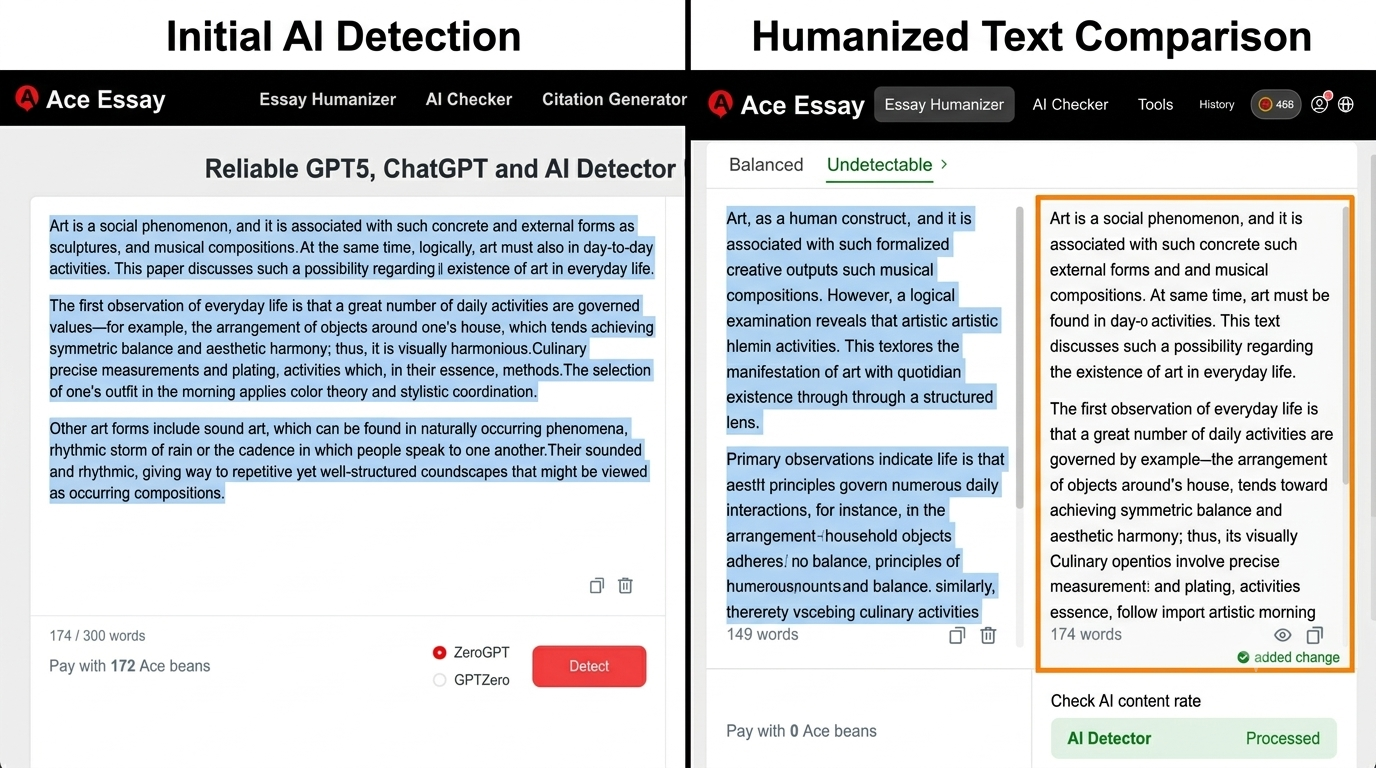
What This Means for Educators
For educators and institutions, the key takeaways are:
- Don’t rely solely on AI detection percentages – Always review flagged sections in context
- Be aware of language limitations – Non-English submissions may have different detection capabilities
- Consider the limitations – Heavily rewritten AI content can still evade detection
- Stay informed – Turnitin updates its models regularly, so keep up with release notes
The Bigger Picture
Turnitin’s updates reflect a broader trend in academic integrity: the recognition that AI is here to stay, and detection technology must evolve alongside it. As one analyst noted, this is truly an “AI arms race in education.”
The question isn’t whether AI will be used in academic work—it’s how institutions choose to respond. Some are disabling detection entirely, while others are investing in more sophisticated tools and policies.
Looking Ahead
As we move through 2026, we can expect Turnitin to continue refining its detection capabilities. The planned expansion into speech-to-text, image-to-text, and code generation detection signals that the platform is thinking beyond traditional written essays.
For now, the best approach for everyone involved is to stay informed, understand the technology’s limitations, and remember that the goal isn’t to “beat” AI detectors—it’s to maintain the integrity of academic work while adapting to a changed landscape.
Have you noticed any changes in how Turnitin detects AI-generated content? Share your experiences in the comments below!
Useful Tools
- Essay Humanizer - Make your essay sound more human-written
- AI Detector - Check if your text sounds AI-generated
- Free Citation Generator - Generate citations in multiple formats
- Math Solver - Solve math problems step by step