The rise of artificial intelligence in content creation has transformed how we produce written material, but it has also introduced a new challenge: ensuring that AI-assisted content doesn’t trigger detection tools. Whether you’re a content creator, academic writer, or business professional, understanding how to create authentic, human-like content has become an essential skill.
AI detection tools have become increasingly sophisticated, analyzing writing for specific patterns, sentence structures, and linguistic characteristics that distinguish machine-generated text from human writing. According to research from Springer published in 2024, these detectors are now capable of identifying AI-generated content with remarkable accuracy, making it crucial for writers to master techniques that produce natural, engaging content that resonates with readers while maintaining authenticity.
This comprehensive guide explores seven proven strategies to help you create content that sounds authentically human, passes AI detection tools, and delivers genuine value to your audience.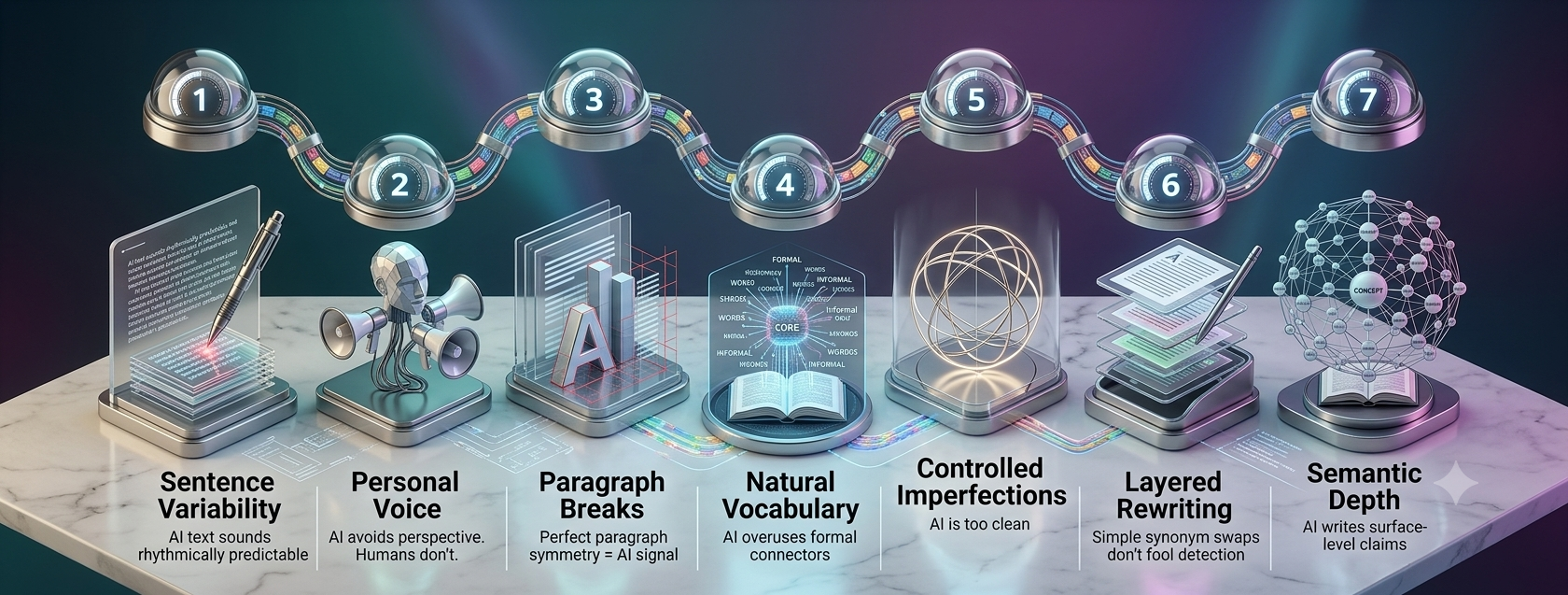
Understanding AI Detection: How It Works
Before diving into the strategies, it’s essential to understand what AI detectors actually analyze. These sophisticated tools examine multiple dimensions of text to estimate the likelihood of AI involvement. According to Grammarly’s research on AI detection, these systems look for patterns such as vocabulary repetition, sentence length uniformity, predictability of word choices, and the overall structural flow of the content.
AI language models tend to produce text with consistent patterns—they often use similar sentence structures, favor certain words over others, and create content that follows predictable formatting. Human writing, by contrast, tends to be more varied, with intentional imperfections, diverse vocabulary choices, and unique stylistic elements that reflect individual personality and thought processes.
The key to successfully humanizing your content lies not in tricks or shortcuts, but in understanding these differences and consciously incorporating more natural, human elements into your writing.
Strategy 1: Embrace Varied Sentence Structures
The Problem with AI-Generated Uniformity
One of the most telltale signs of AI-generated content is sentence uniformity. AI models tend to produce sentences of similar length and structure, creating a rhythm that feels mechanical and predictable. Studies have shown that AI text detectors are particularly sensitive to this pattern, often flagging content where sentence structures lack variation.
Implementing Natural Variation
To create more human-like content, consciously vary your sentence lengths and structures throughout your writing. Mix short, punchy sentences with longer, more complex ones. Incorporate questions, exclamations, and declarative statements to create a natural flow that mimics authentic human thought patterns.
Consider this approach: after writing a paragraph, read it aloud and notice where the rhythm feels monotonous. If you find yourself reading in a consistent, metered pace, that’s a sign you need more variation. Human writers naturally emphasize certain points, change pace to build tension or provide relief, and use sentence structure to guide emotional response.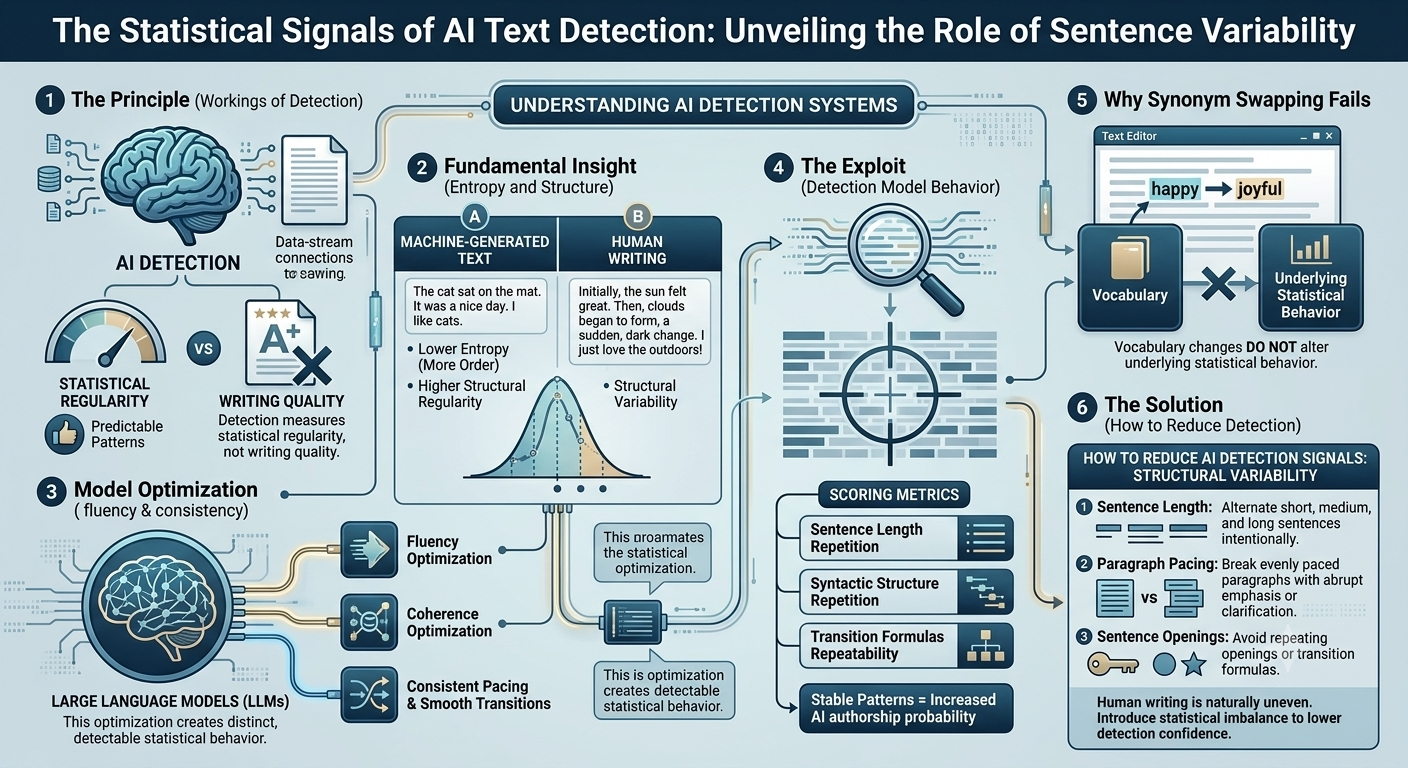
Strategy 2: Inject Personal Voice and Perspective
Why Authenticity Matters
AI-generated content often lacks the personal touch that makes writing engaging and memorable. According to research published in the ACM Digital Library, human readers consistently prefer content that reflects genuine perspective, personal experiences, and individual thought processes. Content that sounds robotic or generic fails to connect with audiences on an emotional level.
Developing Your Unique Voice
Every writer has a unique voice—a combination of word choices, phrase preferences, and stylistic tendencies that make their work distinctively theirs. When using AI tools to assist with content creation, take deliberate steps to infuse your personal voice into the final product.
This means incorporating your own opinions, experiences, and perspectives. Use first-person pronouns naturally. Reference personal anecdotes or observations that support your points. Your voice should come through in your word choices, your humor, your way of explaining complex concepts, and your approach to argumentation.
Remember that great content isn’t just about delivering information—it’s about presenting that information in a way that only you could. Your unique perspective is what transforms generic content into compelling, shareable material.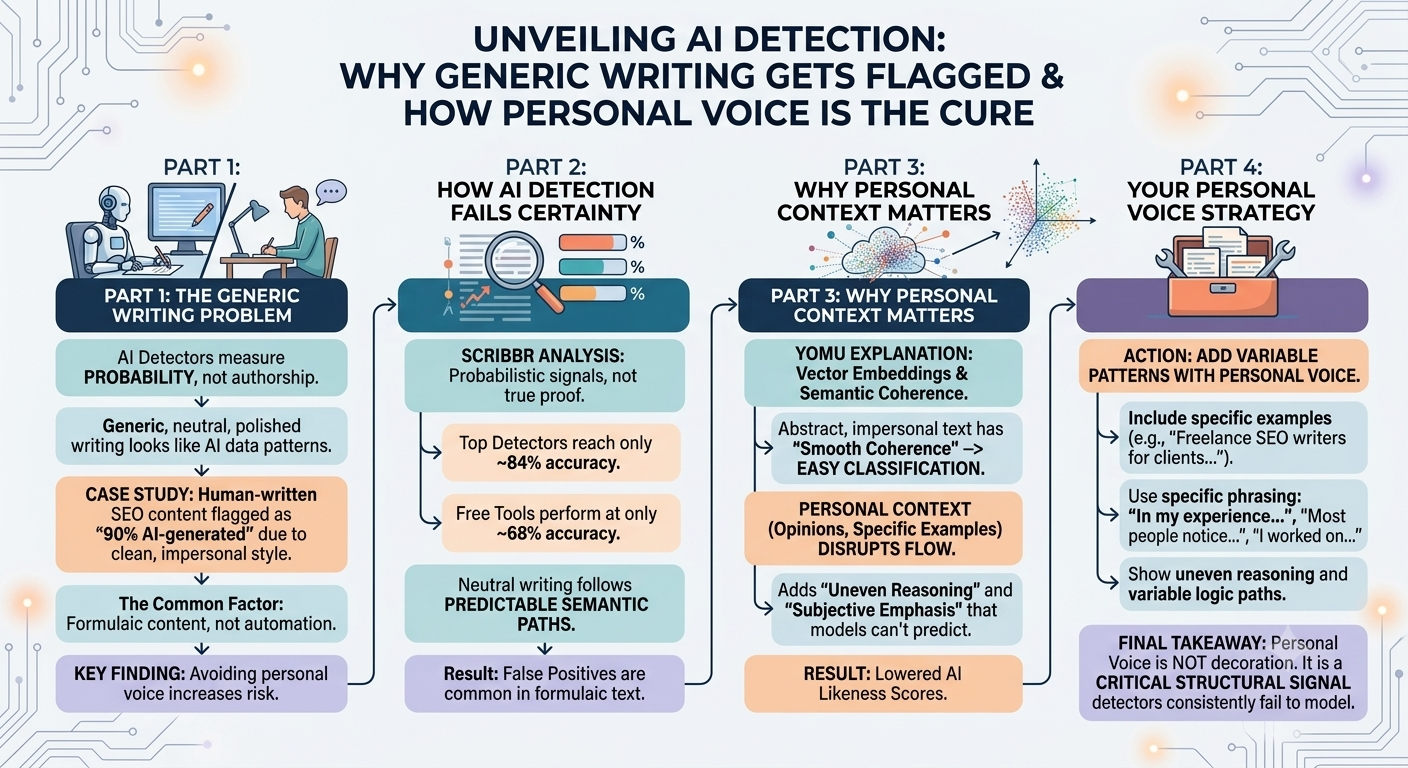
Strategy 3: Add Contextual Depth and Nuance
Moving Beyond Surface-Level Content
AI models often produce content that, while technically accurate, lacks the deep contextual understanding that human experts bring to their writing. This superficiality is often detectable—AI-generated content may provide information without fully exploring the implications, contradictions, or nuances that a human expert would naturally include.
Enriching Your Content
To create content that passes AI detection while providing genuine value, go beyond what AI tools initially produce. Add contextual information that shows deep understanding of the topic. Explore different perspectives, acknowledge complexities, and discuss potential counterarguments.
Include specific examples from your own knowledge and experience. Reference niche information or recent developments that demonstrate genuine expertise. Discuss the “why” behind facts, not just the “what.” This depth signals authentic human understanding and creates content that readers find genuinely valuable.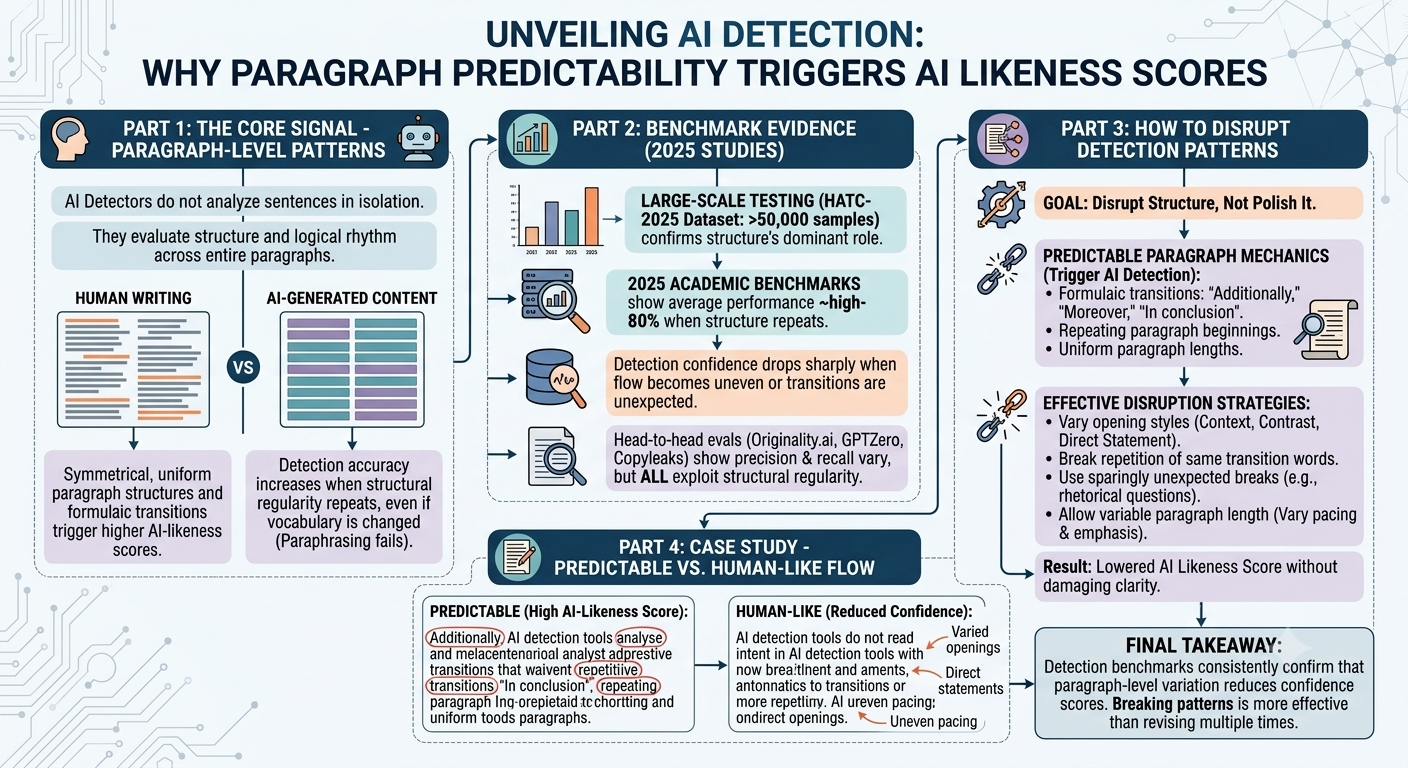
Strategy 4: Master Natural Transitions and Flow
The Art of Seamless Writing
Transitions are where many AI tools struggle most. AI-generated transitions often feel forced, repetitive, or overly formulaic. Phrases like “Furthermore,” “In conclusion,” and “Additionally” appear with mechanical regularity in AI content, creating a recognizable pattern that detection tools have learned to identify.
Creating Organic Connections
Human writers connect ideas in more creative, varied ways. They use implicit transitions, allowing the logical flow of ideas to create connections without explicit transitional phrases. They might shift topics mid-sentence, use subtle references to previous points, or build cumulative arguments that naturally lead from one idea to the next.
Practice developing smoother transitions that emerge organically from your content. Instead of relying on transitional phrases, let your ideas naturally build upon each other. Use pronouns, echo key terms, and create logical connections that guide readers through your content without obvious signposting.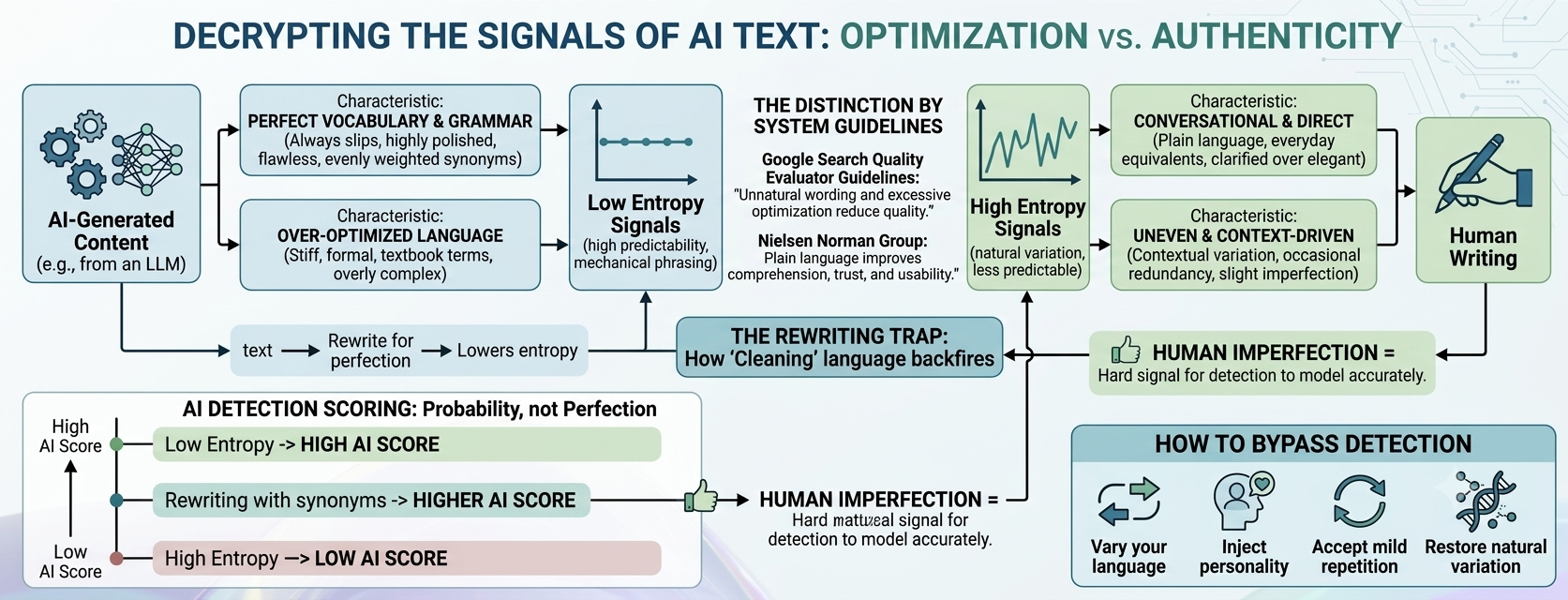
Strategy 5: Strategic Use of Imperfection
The Value of Intentional Variation
Perfect grammar, flawless spelling, and pristine punctuation might seem like goals to aspire to, but perfect text is actually a hallmark of AI-generated content. Human writing naturally contains small imperfections—occasional typos in drafts that slip through, slightly informal language choices, and creative grammatical constructions that deviate from strict rules.
Knowing When to Break Rules
Strategic imperfection doesn’t mean producing sloppy content—it means allowing your writing to feel human. This might include using contractions more frequently, incorporating conversational language, allowing occasional sentence fragments for emphasis, or using less formal vocabulary where appropriate.
The goal is to create content that sounds like it was written by a thoughtful human who was focused on communicating ideas rather than achieving mechanical perfection. Read your content aloud: if it sounds like a textbook, add more conversational elements. If it sounds too casual for the context, tighten it up.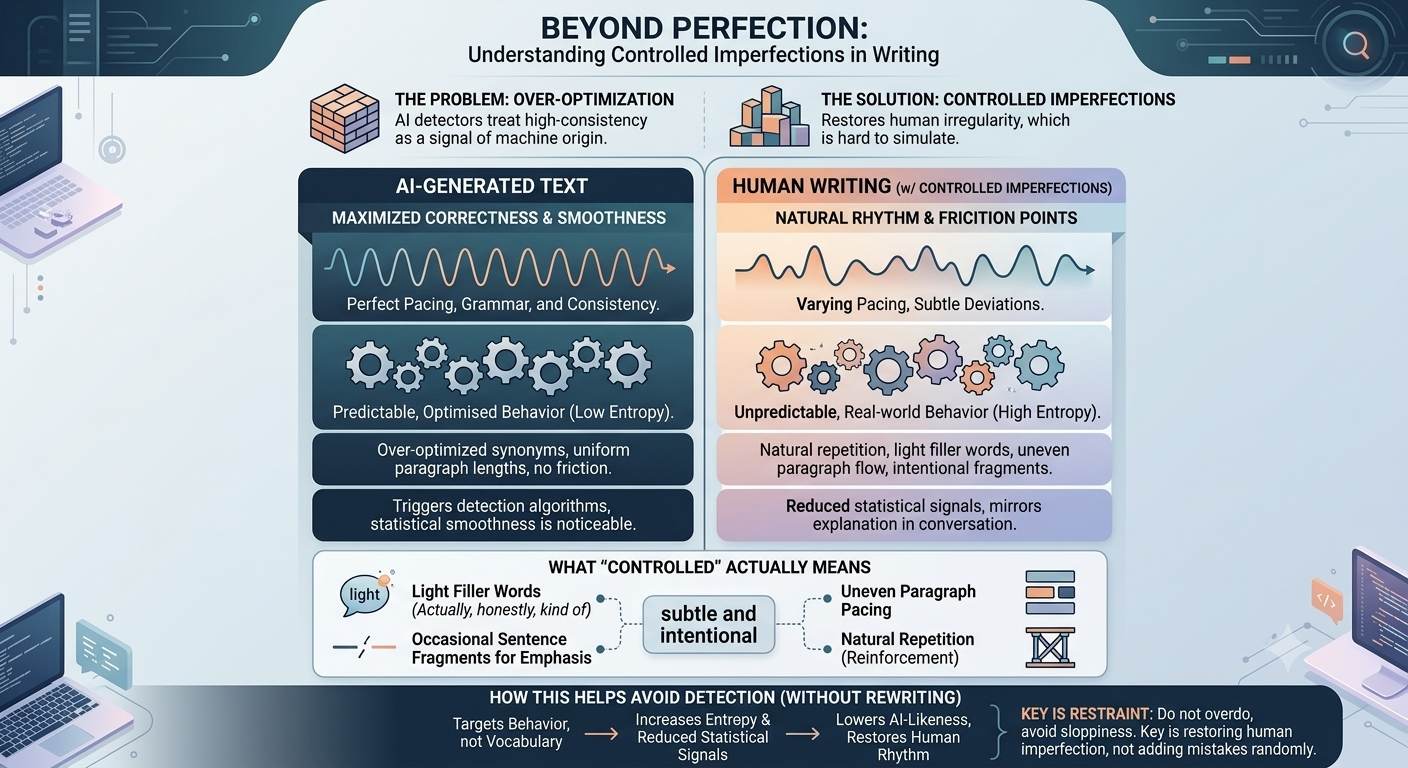
Strategy 6: Incorporate Real-Time Human Editing
The Human Touch in Revisions
No AI-generated first draft should be published without human review and revision. The editing process is where truly human content emerges. According to content creation experts at GravityWrite, effective humanization requires treating AI output as a starting point rather than a finished product.
Creating an Effective Editing Workflow
Develop a systematic approach to editing AI-assisted content:
- Read and absorb: Before making any changes, read the entire piece to understand its flow and identify areas that feel unnatural.
- Add personal elements: Inject your voice, experiences, and perspectives throughout.
- Vary sentence structure: Rewrite sentences to create more natural rhythm and flow.
- Check for repetition: AI tools often repeat phrases and ideas; eliminate redundancies.
- Add depth: Expand on points that feel superficial; add context and nuance.
- Test readability: Read aloud, checking for natural-sounding content.
This revision process transforms AI-generated drafts into polished, human-sounding content that resonates with readers and passes detection tools.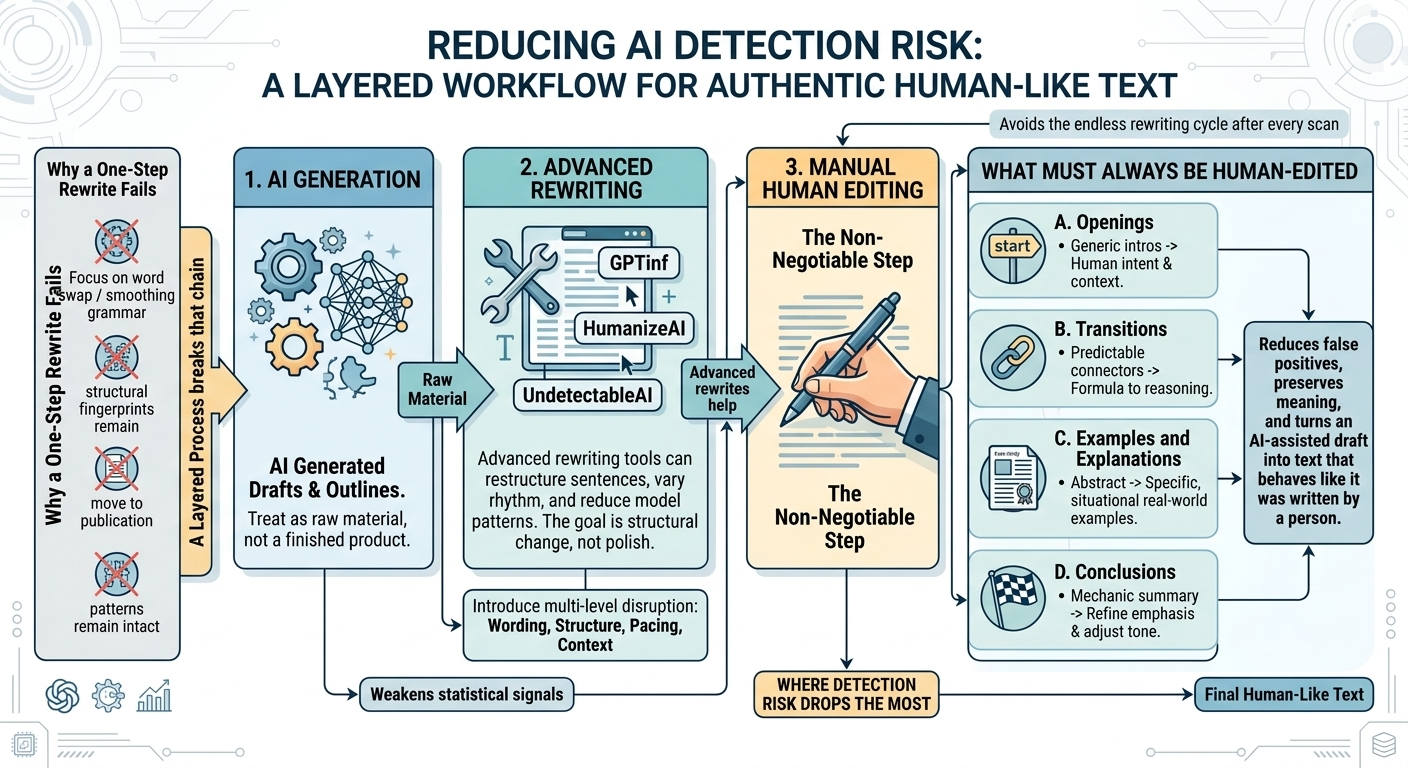
Strategy 7: Understand and Respect Ethical Boundaries
The Responsible Approach to AI-Assisted Writing
While the techniques above help create more natural content, it’s crucial to maintain ethical standards in your approach. Using AI as a drafting tool to overcome writer’s block or improve efficiency is different from attempting to deceive readers or institutions about the origin of your content.
Ethical Best Practices
- Always disclose AI assistance when required by your institution, client, or ethical guidelines
- Use AI as a starting point, not a final product
- Take responsibility for the accuracy and quality of your final content
- Prioritize genuine value over detection avoidance
The goal of humanizing content should be to create better, more engaging material—not to trick detection tools while producing low-quality work. Content that provides genuine value to readers will always be more successful than content designed merely to fool algorithms.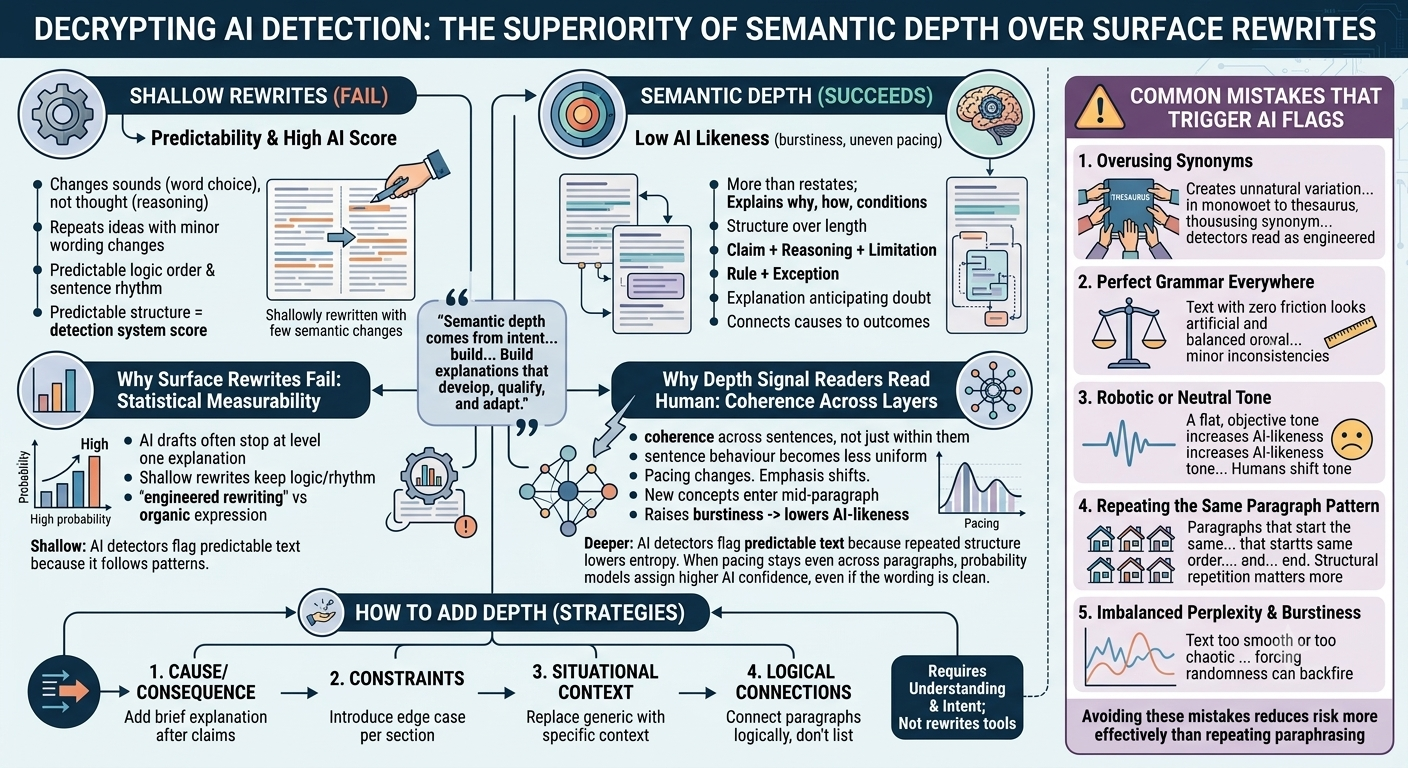
Additional Tools and Resources
AI Humanizer Tools
Several AI humanizer tools have emerged to help writers create more natural content. Platforms like WriteHuman, Rewritify, and Quillbot’s AI Humanizer offer features designed to transform AI-generated text into more human-sounding content. However, these tools should be used as aids rather than replacements for human editing and creativity.
Testing Your Content
Before publishing or submitting AI-assisted content, test it using AI detection tools to identify areas that might flag as AI-generated. Tools like GPTZero, Copyleaks, and ZeroGPT can help you identify problematic patterns that need revision.
Remember that detection tools are constantly evolving, and today’s bypass techniques may not work tomorrow. The most reliable approach is to create genuinely good content that incorporates authentic human elements, rather than attempting to find technical workarounds.
Key Takeaways
Creating content that sounds authentically human while leveraging AI tools requires understanding both the capabilities of detection technology and the characteristics of natural human writing. The seven strategies outlined in this guide provide a comprehensive framework:
- Embrace varied sentence structures to break the monotony of AI-generated text
- Inject personal voice and perspective to create unique, engaging content
- Add contextual depth and nuance to demonstrate genuine expertise
- Master natural transitions and flow for seamless reading experiences
- Strategic use of imperfection to create authentic, human-sounding content
- Implement thorough human editing to transform drafts into polished work
- Maintain ethical boundaries and prioritize genuine value
Conclusion
The landscape of content creation continues to evolve, with AI tools becoming increasingly integrated into writing workflows. Understanding how to create human-like content that passes detection tools is valuable, but the ultimate goal should always be to produce content that genuinely serves your audience.
By implementing these seven proven strategies, you can create content that not only passes AI detection but also provides real value to readers. The key lies in using AI as a tool to enhance your writing rather than replace it entirely, maintaining your unique voice while leveraging technology to improve efficiency.
Remember: the most successful content comes from combining the best of human creativity and insight with the efficiency of AI assistance. Focus on being a better writer, and the detection tools will become increasingly irrelevant to your success.