Introduction: The Rise of AI-Generated Content and the Need for Humanization
The landscape of content creation has undergone a dramatic transformation over the past few years. With the proliferation of advanced language models like ChatGPT, Claude, Gemini, and other AI writing assistants, the volume of AI-generated content on the internet has exploded exponentially. According to recent industry reports, over 60% of all online content now involves some form of AI assistance in its creation process.
However, this technological revolution has brought with it a significant challenge: the distinctive “robotic” tone that often accompanies AI-generated text. While these powerful tools can produce grammatically correct and informative content, they frequently lack the nuanced creativity, emotional depth, and natural flow that human readers instinctively recognize and appreciate.
This is where AI humanizers come into play—sophisticated tools designed to transform machine-generated text into content that sounds authentically human. Whether you’re a content marketer looking to improve engagement, a student seeking to refine AI-assisted essays, or a professional writer aiming to streamline your workflow while maintaining authenticity, understanding AI humanizers has become essential in today’s content ecosystem.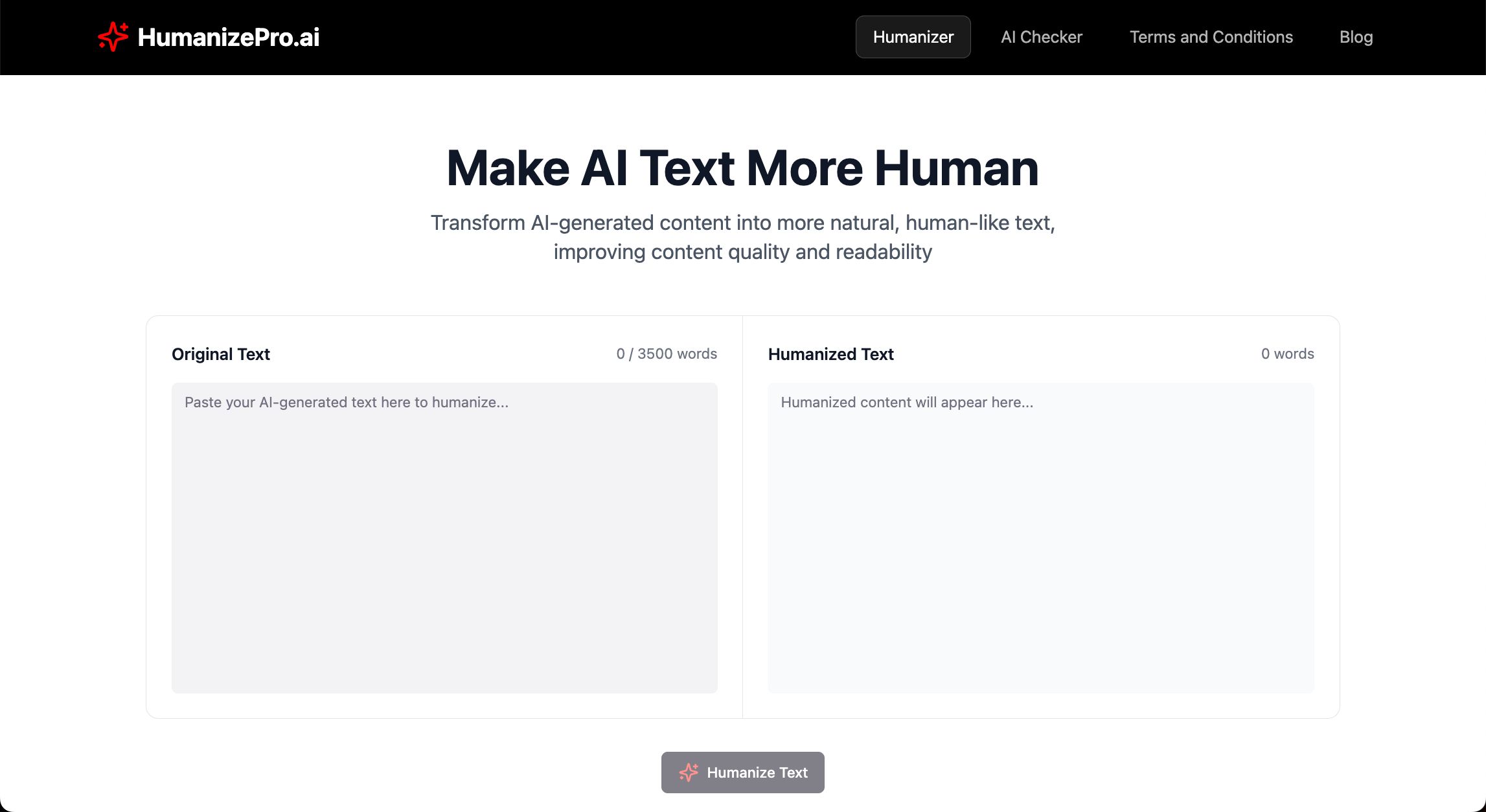
In this comprehensive guide, we’ll explore everything you need to know about AI humanizers, including the latest developments through 2025, how these tools work, their practical applications, and a detailed comparison of the leading solutions available today.
What is an AI Humanizer?
An AI humanizer is a specialized tool or technology that transforms AI-generated text into content that reads as if a human wrote it. These tools go beyond simple paraphrasing or grammar correction—they employ advanced algorithms and natural language processing techniques to introduce the subtle variations, emotional undertones, and creative elements that characterize authentic human writing.
Core Functions of AI Humanizers
Modern AI humanizers perform several key functions that distinguish them from traditional rewriting tools:
- Tone Modulation: Adjusting the overall tone of the text to sound more conversational, authoritative, or empathetic depending on the intended audience.
- Sentence Structure Variation: Breaking up monotonous sentence patterns that AI models tend to generate, introducing varied sentence lengths and structures.
- Vocabulary Enhancement: Replacing repetitive or overly formal language with more natural, contextually appropriate word choices.
- Rhythm and Flow Optimization: Creating a more natural reading rhythm that mimics how humans naturally write and communicate.
- Personalization Elements: Adding subtle personal touches, anecdotes, or conversational elements that make content feel more relatable.
- AI Detection Evasion: Ensuring the humanized content can successfully bypass sophisticated AI detection tools like Turnitin, GPTZero, Originality.ai, and Copyleaks.
The Technology Behind AI Humanizers: How Do They Work?
Understanding the underlying technology can help you use these tools more effectively. AI humanizers leverage a combination of advanced techniques:
Natural Language Processing (NLP) Algorithms
At their core, AI humanizers use sophisticated NLP algorithms that analyze the linguistic patterns of the input text. These algorithms identify characteristics commonly associated with AI-generated content, such as:
- Overly consistent sentence lengths
- Excessive use of transition words
- Predictable paragraph structures
- Lack of colloquialisms or idiomatic expressions
- Absence of personal pronouns and subjective language
Semantic Reconstruction
Rather than simply swapping synonyms, advanced humanizers perform semantic reconstruction—understanding the meaning behind the text and re-expressing it in ways that humans naturally communicate. This involves:
- Contextual understanding of the subject matter
- Preservation of key information while changing expression
- Integration of domain-specific terminology
- Maintaining logical coherence and argument flow
Machine Learning Models
Many modern AI humanizers employ specialized machine learning models trained on vast datasets of human-written content. These models have learned to recognize the subtle patterns that distinguish human writing from AI output, enabling them to make precise adjustments that maintain authenticity while preserving the original message.
Multilingual Capabilities
The best AI humanizers in 2025 support multiple languages, enabling content transformation across diverse linguistic contexts. This is particularly valuable for global businesses and content creators working with international audiences. Tools like HumanizePro.ai and similar platforms offer support for major languages including English, Spanish, French, German, Chinese, Japanese, and many others.
Latest Developments in AI Humanization Technology (2024-2026)
The AI humanization landscape has evolved significantly, with several notable developments shaping the industry:
Enhanced Detection Resistance
As AI detection tools have become more sophisticated, so have humanization techniques. The latest AI humanizers now incorporate advanced evasion strategies specifically designed to counter modern detection algorithms. According to recent testing by industry experts at Ryter Pro, top-tier humanizers achieve bypass rates exceeding 95% against leading detectors like Turnitin, GPTZero, and Originality.ai.
Context-Aware Processing
Modern humanizers no longer simply transform text word-by-word. They now understand context, tone, and purpose, allowing for more nuanced transformations that maintain the original intent while dramatically improving readability and authenticity.
Real-Time Transformation
The newest platforms offer instant humanization with minimal latency, allowing users to paste AI-generated text and receive humanized output within seconds. This has made the technology practical for high-volume content production environments.
Integration Capabilities
Leading AI humanizers now offer API integrations, browser extensions, and seamless connections with popular content management systems and AI writing tools, streamlining workflows for professional content creators.
Why Humanize AI-Generated Content? Key Benefits
The question isn’t just about how to humanize AI text—it’s about understanding why this transformation matters for your specific needs.
1. Enhanced Reader Engagement
Human-like content resonates more deeply with readers. Studies have shown that content with natural variation in sentence structure, emotional depth, and conversational elements maintains reader attention significantly longer than text with a robotic tone.
2. Improved SEO Performance
Search engines increasingly prioritize content quality in their ranking algorithms. Humanized content that keeps readers engaged longer, reduces bounce rates, and encourages social sharing signals to search engines that your content provides value—factors that can positively impact your search rankings.
As highlighted by HubSpot’s research on content humanization, balancing AI assistance with human touch is essential for creating content that both algorithms and readers love.
3. Academic and Professional Credibility
For students and professionals using AI-assisted writing, humanization ensures that the final output meets institutional and professional standards for originality and authenticity.
4. Brand Voice Consistency
Organizations can use AI humanizers to maintain consistent brand voice across high-volume content production while ensuring the content doesn’t sound generic or impersonal.
5. bypassing AI Detection Systems
In academic, professional, and publishing contexts where AI-assisted content may face scrutiny, humanization helps ensure your content passes AI detection checks while maintaining its informative value.
Comprehensive Comparison of Leading AI Humanizers (2025)
With numerous AI humanizer tools available, choosing the right one can be challenging. Here’s a detailed comparison of the leading solutions:
Feature Comparison Table
| Tool | Free Version | Languages | Bypass Rate | Word Limit | Key Features |
|---|---|---|---|---|---|
| HumanizePro.ai | Yes (Limited) | 50+ | 95%+ | 10,000/req | Advanced NLP, multiple modes |
| Quillbot AI Humanizer | Yes | 20+ | 85%+ | 5,000/req | Integration with writing suite |
| Grammarly AI Humanizer | Yes | 10+ | 80%+ | 5,000/req | Grammar optimization included |
| Undetectable.ai | Yes (Limited) | 30+ | 90%+ | 15,000/req | Stealth mode, plagiarism check |
| Humanize.ai | Yes (Unlimited) | 25+ | 88%+ | Unlimited | No sign-up required |
| AI Humanize | Yes | 40+ | 92%+ | 8,000/req | Custom tone settings |
| BypassGPT | Yes | 30+ | 89%+ | 7,000/req | SEO-focused optimization |
Detailed Analysis
HumanizePro.ai
HumanizePro.ai stands out as a comprehensive solution offering 100% free access with powerful features. The platform specializes in transforming content from ChatGPT, Claude, Gemini, and other AI tools into undetectable, human-like writing. Its advanced AI detection evasion capabilities make it particularly effective for content that needs to pass rigorous detection systems.
Strengths:
- High bypass success rate against major detectors
- Multiple humanization modes for different content types
- No sign-up required for basic features
- Multilingual support for global content
Considerations: - Free version has some limitations on advanced features
- Processing time may vary during peak usage
Quillbot AI Humanizer
As part of the well-established Quillbot ecosystem, their AI humanizer integrates seamlessly with other writing tools. It’s particularly useful for users already invested in the Quillbot platform who need humanization capabilities alongside paraphrasing and grammar checking.
Strengths:
- Integration with comprehensive writing suite
- User-friendly interface
- Trusted brand with established reputation
- Reliable grammar and style improvements
Considerations: - Bypass rates may be lower against advanced detectors
- More focused on rewriting than comprehensive humanization
Grammarly AI Humanizer
Grammarly’s humanizer tool benefits from the platform’s extensive grammar and style database. It’s an excellent choice for users who want to combine humanization with comprehensive writing assistance.
Strengths:
- Excellent grammar optimization
- Browser extension available
- Integration with multiple platforms
- Established user base and reliability
Considerations: - Less aggressive humanization compared to specialized tools
- May require Grammarly subscription for full features
Undetectable.ai
Undetectable.ai has gained significant attention for its “stealth mode” capabilities, specifically designed to counter modern AI detection systems. The platform offers comprehensive checking alongside humanization.
Strengths:
- High success rate against Turnitin and GPTZero
- Built-in plagiarism checking
- Multiple content modes (casual, formal, academic)
- API access for developers
Considerations: - Premium features require subscription
- Some processing delays during high-traffic periods
Practical Applications: When and How to Use AI Humanizers
Content Marketing
For content marketers, AI humanizers offer an efficient way to scale content production while maintaining quality. The workflow typically involves:
- Generate initial content draft using AI tools
- Run through AI humanizer for initial transformation
- Review and refine for brand voice consistency
- Add personal insights, statistics, or examples
- Final optimization for SEO
Academic Writing
Students and researchers can use AI humanizers to:
- Refine AI-assisted research summaries
- Improve readability of technical content
- Ensure citations and references are properly integrated
- Maintain academic tone while improving engagement
Professional Communication
Business professionals benefit from AI humanizers for:
- Drafting emails and proposals with AI assistance
- Creating reports and presentations
- Developing training materials
- Writing professional correspondence
Creative Writing
Writers can leverage AI humanizers to:
- Overcome writer’s block with AI-generated prompts
- Refine first drafts while maintaining creative voice
- Generate alternative phrasings for inspiration
- Speed up editing and revision processes
Step-by-Step Guide: How to Humanize AI Text Effectively
Step 1: Generate Quality AI Content
The humanization process is only as good as the initial content. Provide clear, detailed prompts to your AI tool to generate comprehensive initial content. Include information about:
- Target audience
- Desired tone and style
- Key points to cover
- Word count requirements
- Any specific constraints
Step 2: Choose the Right Humanizer
Select an AI humanizer that matches your needs. Consider:
- Required bypass rate for your use case
- Language requirements
- Integration needs
- Budget constraints
Step 3: Apply Humanization
Most tools follow a similar process:
- Paste your AI-generated text
- Select humanization mode (casual, formal, creative, etc.)
- Adjust intensity level if available
- Generate humanized version
- Review output for accuracy
Step 4: Review and Edit
Never skip the human review step. Check for:
- Factual accuracy maintained
- Brand voice consistency
- Appropriate tone for audience
- Logical flow and coherence
- Any awkward phrasing or errors
Step 5: Add Personal Touches
The best humanized content includes:
- Personal anecdotes or examples
- Industry-specific insights
- Unique perspectives
- Direct reader engagement
- Calls to action or reflection questions
FAQ: Frequently Asked Questions About AI Humanizers
Q1: Is using an AI humanizer considered cheating?
A: This depends entirely on the context and your intentions. Using AI humanizers to refine and improve your own writing is generally acceptable, much like using grammar checkers or editing tools. However, misrepresenting AI-generated content as entirely human-written without disclosure may violate institutional or platform policies. Always be transparent about your use of AI tools when appropriate.
Q2: Can AI humanizers completely bypass AI detection tools?
A: The best modern AI humanizers achieve bypass rates of 85-99% against major detection tools. However, no tool can guarantee 100% success, as detection technology continues to evolve. The most effective approach combines high-quality humanization with substantive human editing and additions.
Q3: Does humanizing AI content affect SEO negatively?
A: When done correctly, humanization actually improves SEO performance. Human-like content tends to have better engagement metrics (time on page, bounce rate, social shares), which are positive ranking signals. The key is ensuring that humanization improves content quality rather than just making superficial changes.
Q4: Are AI humanizers legal to use?
A: Yes, AI humanizers are legal tools. However, you should be aware of specific regulations in your jurisdiction or industry regarding AI-generated content disclosure. Some academic institutions, publishers, and platforms have specific policies requiring disclosure of AI assistance.
Q5: How much does AI humanization cost?
A: Many AI humanizers offer free versions with limited features. Premium versions typically range from $10-50/month depending on usage volume and feature access. Some platforms like Humanize.ai and HumanizePro.ai offer substantial free access, making them accessible for users on any budget.
Q6: Will humanized content still be original?
A: Quality AI humanizers generate original content by restructuring and rephrasing rather than copying. Most reputable tools also include plagiarism checking to ensure your humanized content doesn’t inadvertently include copyrighted material.
Q7: Can AI humanizers maintain technical accuracy?
A: Advanced humanizers are designed to preserve the factual content and meaning of your original text while changing how it’s expressed. However, it’s always recommended to review technical content for accuracy, especially when dealing with specialized subject matter.
Q8: How do I choose between different humanization modes?
A: Most tools offer modes like:
- Casual/Conversational: For blog posts, social media, friendly emails
- Professional/Business: For workplace communication, reports, proposals
- Academic: For research papers, essays, scholarly content
- Creative: For marketing copy, storytelling, engaging content
Choose the mode that best matches your content’s purpose and target audience.
Q9: Can I use AI humanizers for non-English content?
A: Many modern humanizers support multiple languages. Check individual tool specifications for supported languages. Some, like HumanizePro.ai, offer support for 50+ languages, making them suitable for international use.
Q10: What’s the difference between AI humanizers and paraphrasing tools?
A: While there’s some overlap, key differences include:
- AI Humanizers: Specifically designed to remove AI signatures and create human-sounding text, with built-in detection evasion
- Paraphrasing Tools: Focus on rephrasing content to avoid plagiarism or simplify language, without specific emphasis on AI detection
Humanizers are more sophisticated and purpose-built for the AI content challenge.
The Future of AI Humanization
As AI technology continues to advance, so will humanization techniques. We can expect:
More Sophisticated Detection Evasion
As AI detectors become more accurate, humanizers will develop increasingly sophisticated counter-measures, potentially using adversarial techniques and continuous learning systems.
Integration with Content Workflows
Expect deeper integration with content management systems, AI writing assistants, and publishing platforms, making humanization a seamless part of the content creation process.
Customization and Personalization
Future humanizers may offer more granular control over output style, allowing users to define specific voice characteristics, reading levels, and personality traits.
Regulatory Developments
As AI content becomes more prevalent, we may see new regulations around AI content disclosure, which will shape how humanization tools operate and how they’re used.
Conclusion: Embracing the Human-AI Collaboration
AI humanizers represent a significant advancement in how we create and refine content. They bridge the gap between the efficiency of AI writing tools and the authenticity that audiences expect from human communication.
The key to success lies in understanding that AI humanizers are tools to enhance your content—not replacements for human creativity and judgment. The most effective approach combines:
- Leveraging AI for efficiency in initial content generation
- Using humanizers for transformation to improve authenticity
- Applying human editing to ensure accuracy and add unique value
- Maintaining transparency about AI assistance when appropriate
Whether you’re a content marketer looking to scale production, a student refining your academic writing, or a professional seeking to improve your communication efficiency, AI humanizers offer valuable capabilities that can significantly enhance your content workflow.
As we move through 2025 and beyond, those who master the effective use of these tools while maintaining the essential human touch will be best positioned to succeed in an increasingly AI-augmented content landscape.
Key Takeaways
- AI humanizers transform robotic AI text into natural, engaging content
- Modern tools achieve high success rates against AI detection systems
- The best results come from combining AI assistance with human refinement
- Choose tools based on your specific needs, language requirements, and budget
- Always review humanized content for accuracy and appropriateness
- Stay informed about evolving policies and best practices
Final Thoughts
AI humanizers don’t simply replace words—they aim to improve readability while preserving the original meaning. Understanding how these tools work helps you use them more effectively and responsibly.
Continue Reading
If you’d like to explore this topic further, these guides may help: